1. Why Modify the Home
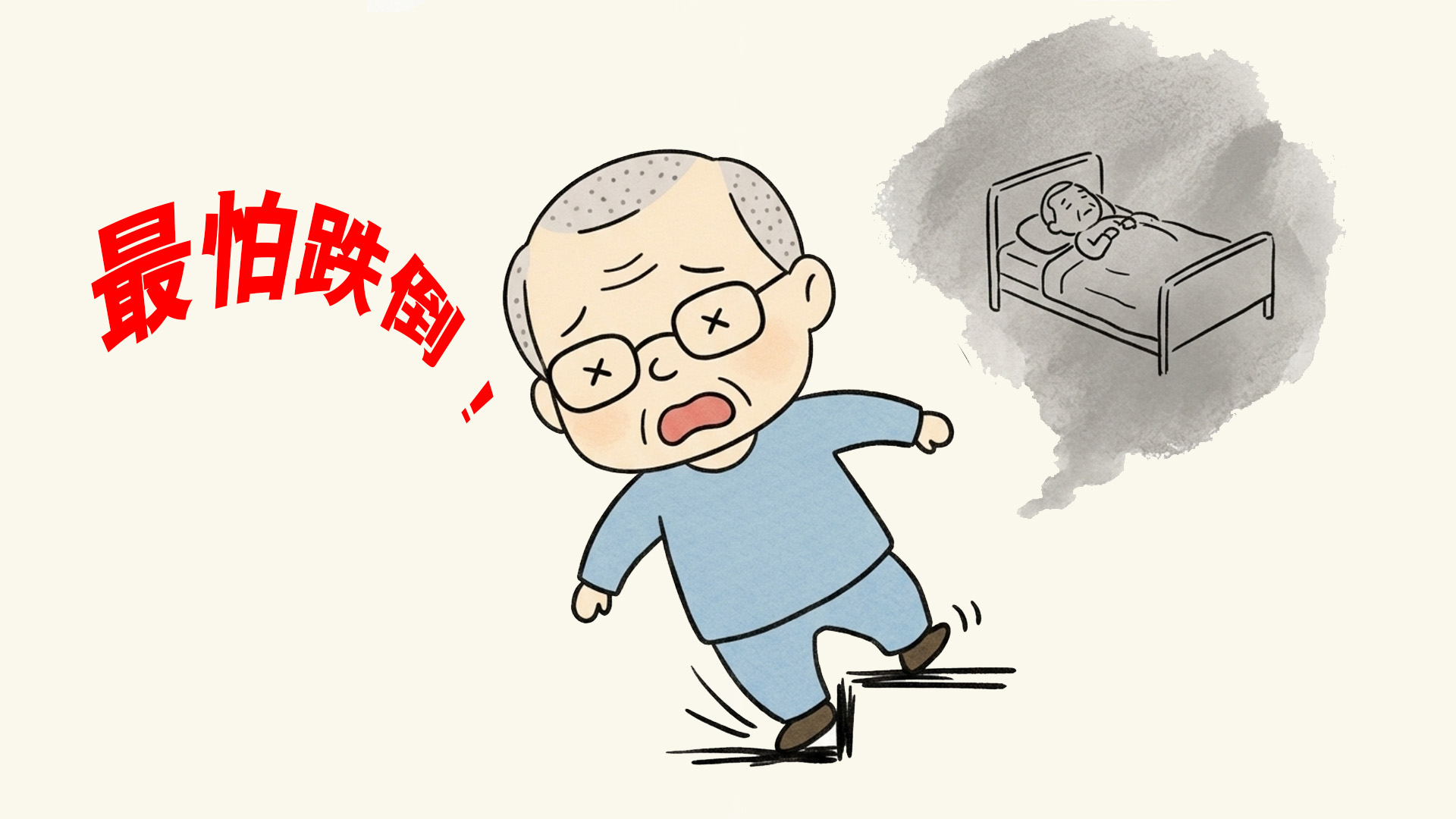
Falls are what seniors fear most. With declining muscle strength and weakening balance, elderly people fall easily — often leading to serious injuries such as fractures. Once a senior is bedridden after a fracture, daily living becomes hard to manage on their own, which greatly increases the burden on caregivers. According to the Elderly Health Service, about 15.7% of community-dwelling adults aged 65 or above fell at least once in the past year, and about 9.8% of those who fell suffered a fracture.
For this reason, the living environment of an elderly person should followfall preventionas the principle, with necessary modifications and tidying.
The Department of Health's Unintentional Injury Survey Report identifies falls as a common cause of injury. Most cases are linked to corridor steps, door thresholds, clutter on the floor, and trailing extension cords. In addition, many seniors have declining vision; if the entrance and corridors are dimly lit and the floor is uneven, falls become very likely. For elderly people living alone or left behind in Hong Kong, creating abarrier-free home, adding lighting in corridors and stairways, and installing handrails on walls, all greatly improve home safety.
2. Renovation Principles
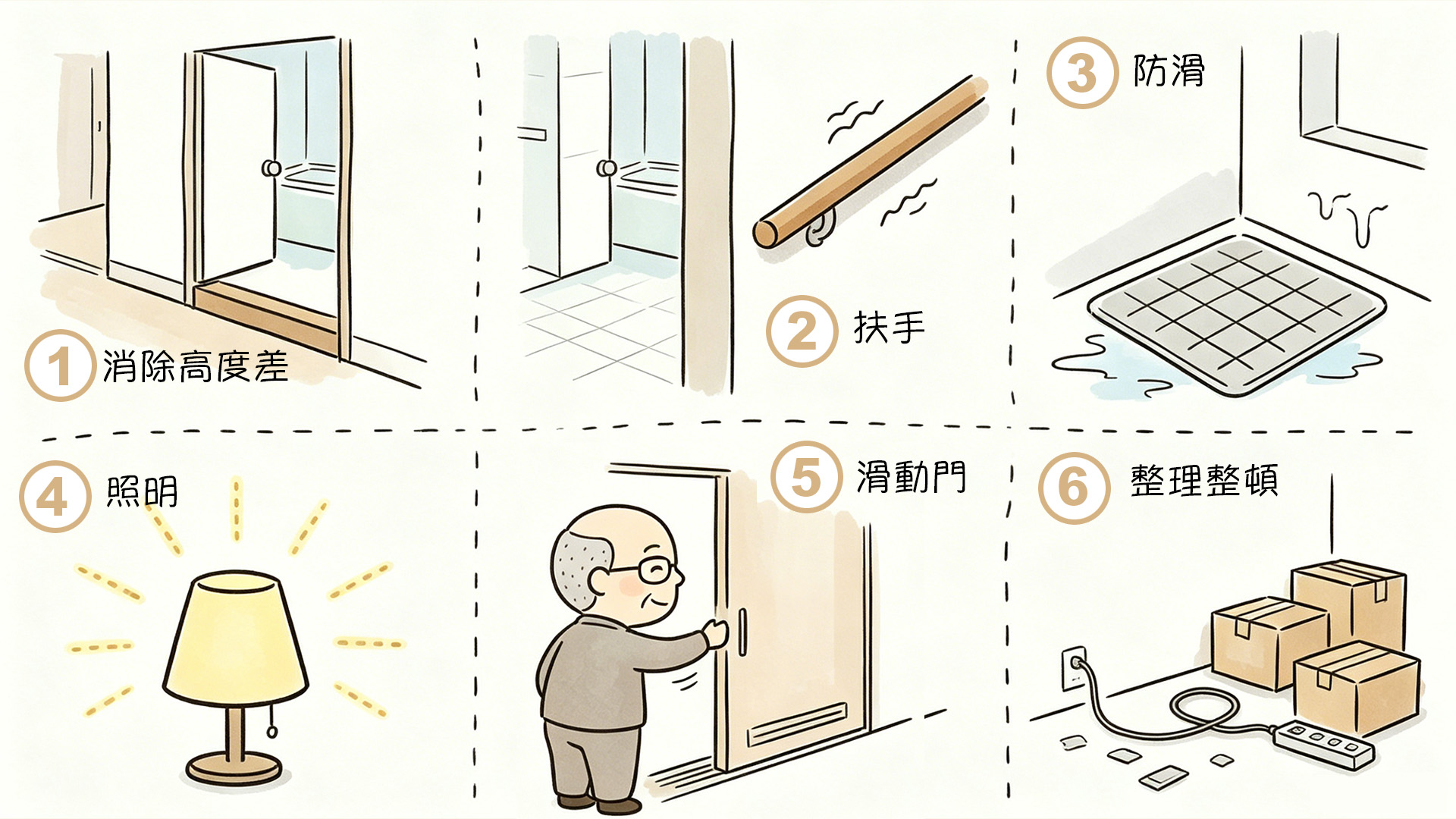
- Eliminate height differences:Make indoor flooring fully barrier-free, removing steps and thresholds.
- Install handrails:Install handrails in the bathroom, toilet, and frequently used corridors and stairways.
- Anti-slip measures:Lay anti-slip mats in slippery areas such as the bathtub and stairs; secure rugs and mats with double-sided tape.
- Adequate lighting:Install bright lights on stairs and in corridors, especially night lights.
- Switch to sliding doors:When pulling open a traditional door, seniors can lose balance and fall backwards — so it is best to convert to sliding doors.
- Keep the home tidy:Reduce obstacles. Clutter on the floor such as scattered newspapers and trailing cords can easily trip seniors, so tidy up regularly to remove hazards.
3. Renovation Plan
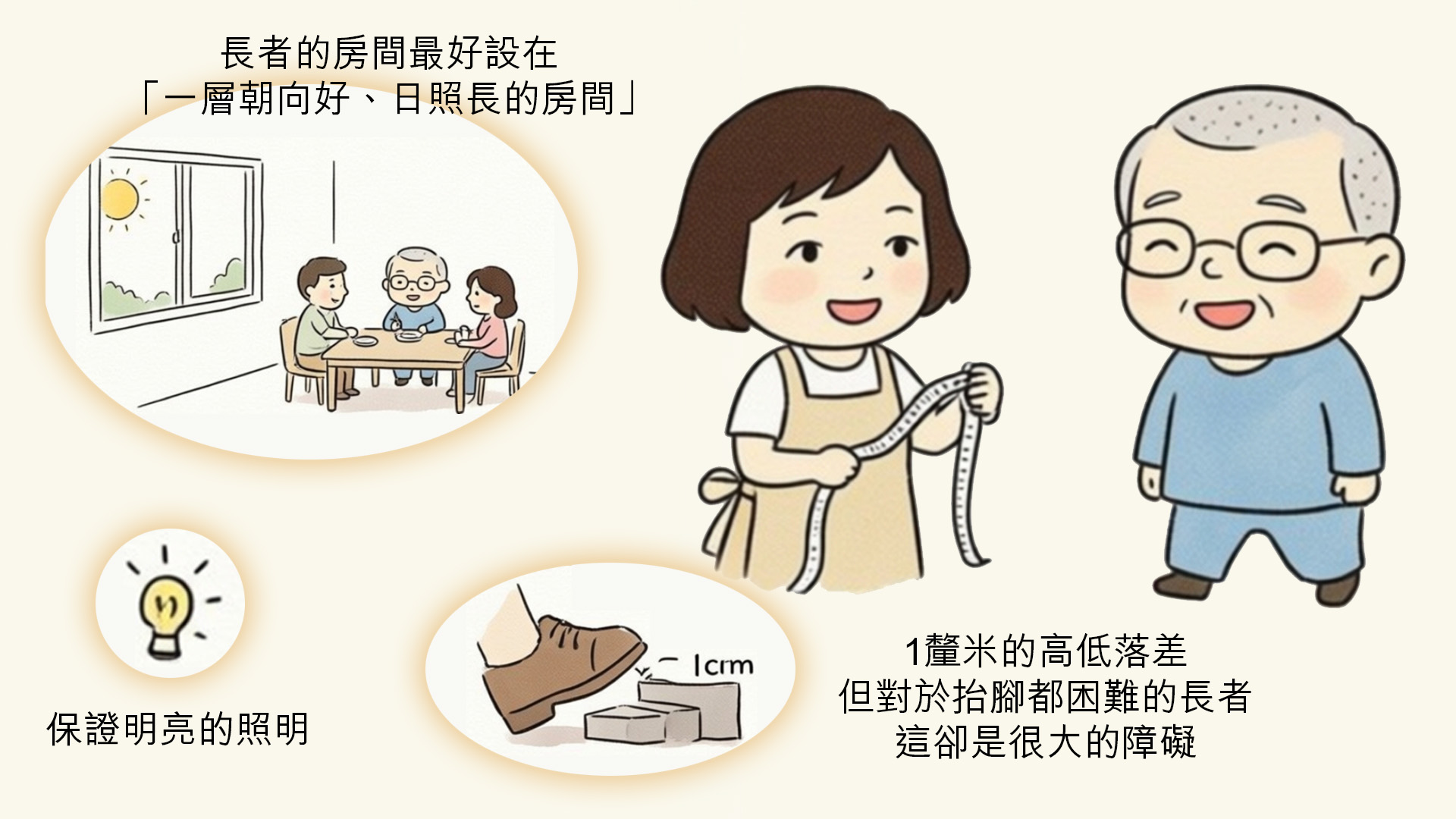
When planning safety modifications for a senior's home, first understand the elder's physical condition, including height and weight. A young person may not notice a height difference of just 1 cm but for an elder who struggles even to lift their feet, it is a major obstacle.
If you plan a full renovation, the elder's room is best placed:
- On a low floor, facing a good direction, with plenty of sunlight
- The room closest to the toilet
- A room that makes it easy to interact with family(avoid placing the elder in an isolated corner)
For smaller, partial renovations, proceed in order of importance:eliminate height differences → install handrails → lay anti-slip mats → ensure adequate lighting → switch to sliding doorsAlso, never leave obstacles on the floor; keep it tidy at all times.
4. Safety Measures by Room
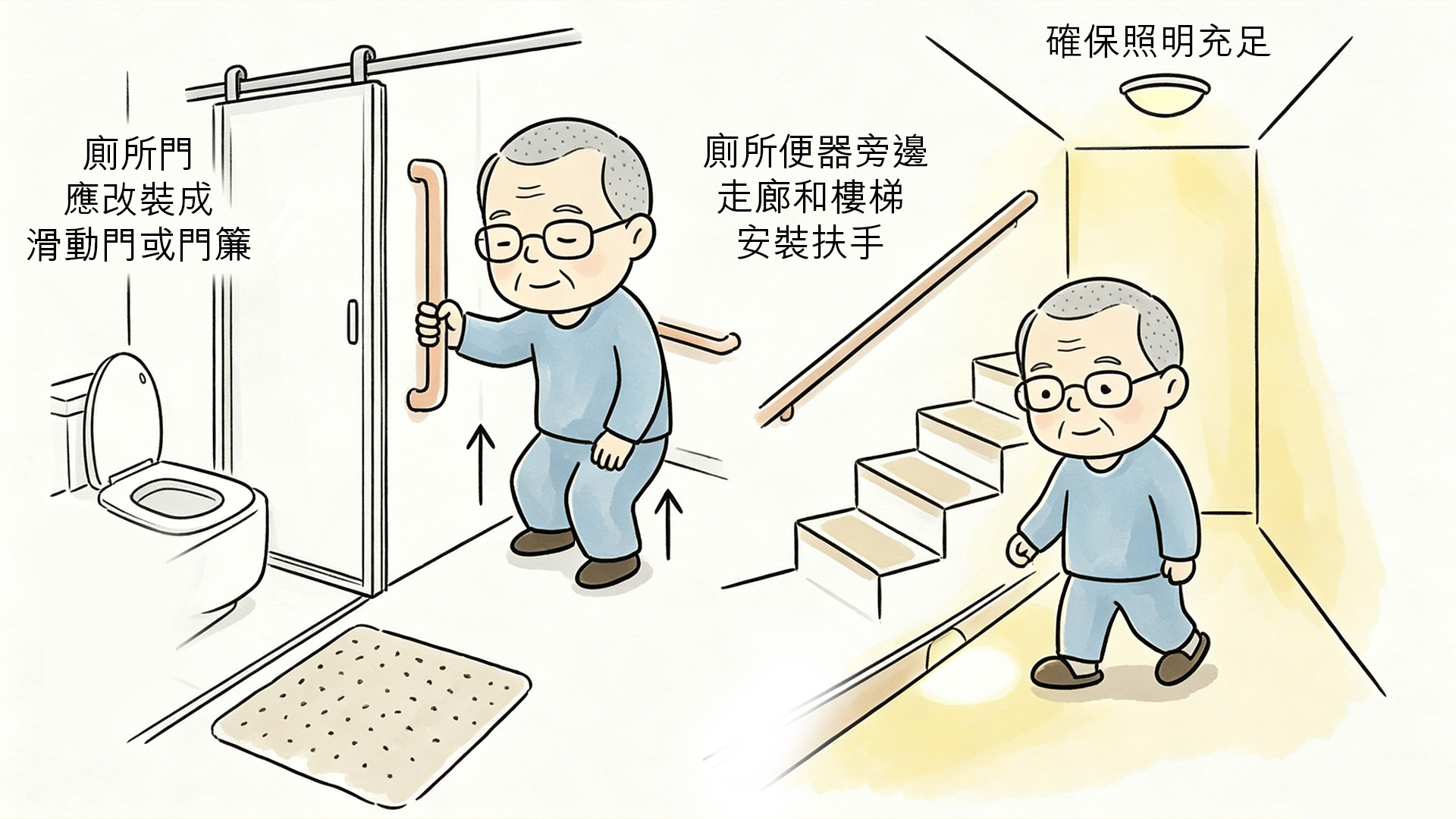
- Toilet:The toilet door should be replaced with a sliding door or curtain, and handrails installed. Although doors and toilet positions vary, an L-shaped handrail should basically be installed beside the toilet: holding the vertical part helps the elder sit down and stand up, while the horizontal part helps them sit more steadily.
- Bathroom:A bathroom with a wet slippery floor is the most fall-prone area. To prevent falls, lay anti-slip mats on the bathroom floor and inside the bathtub in advance. Also, install handrails near the bathroom door, on walls, and on the side of the bathtub to help the elder sit down and stand up safely.
- Corridor and stairs:Handrails should be installed first in corridors and stairways. A rail diameter of at least 30 mm — slightly thicker — is easier to grip. Since everyone finds a different shape, thickness and height most comfortable, choosing a handrail suited to the individual is important. Bright lighting is also needed, and anti-slip mats should be laid on the stairs.
- Lighting:Ensure lighting is sufficient with no dark corners. In particular, install floor lamps (night lights) and bright ceiling lights on stairs and in corridors so the elder can clearly see every step.
According to the Health Bureau, falls are the leading cause of injury-related hospitalisation. Once the home is made safe and convenient for self-care, caregivers can look after daily life with more peace of mind. If you still have questions about health conditions, test reports or monitoring data, learn about the AngelCare medical group consultation service — ask registered doctors via a WhatsApp group, so caregiver support extends beyond physical home modifications to continuous app-based care.
After creating a safe, self-care-friendly environment for the elder and making the necessary preparations, caregivers can look after the senior's daily life with greater confidence. If you are unsure which areas of the home are most dangerous, learn about the AngelCare registered-nurse home assessment — a nurse visits to review home safety and give care recommendations tailored to the elder's condition.
FAQ
Q1What are the most common causes of falls at home?
A1: Common traps include wet slippery floors, insufficient lighting, obstacles, thresholds and height differences, unsuitable furniture, and trailing cords.
Q2In what order should home modifications be done?
A2: Recommended order: eliminate height differences → install handrails → lay anti-slip mats → ensure adequate lighting → switch to sliding doors; keep the floor tidy and remove clutter and cords.
Q3How should handrails be chosen?
A3: A diameter of at least 30 mm is recommended; let the elder try gripping different thicknesses and heights. An L-shaped rail beside the toilet helps with sitting down and sitting steadily.
Q4If caregivers are unsure where the danger spots are, is there professional help?
A4: You can book an AngelCare registered-nurse home assessment. The nurse visits to evaluate home safety, carry out medication screening, and develop an individual care plan, recommending a modification order based on the elder's condition.