
1. The Core Mindset of Care
Care begins with genuine compassion — true kindness toward our elders. Both ends of life need support: as children we are cared for by our elders, and in old age we too will need help from others. Understanding this shared human cycle keeps caregiving from becoming a heavy sacrifice, and lets us sustain it for the long run.
Unlike raising teenagers, an elder's body follows a natural decline, and dependence deepens gradually. Caregiving is long and painstaking, demanding both mind and body. Working caregivers should prepare themselves mentally early.
This article uses the care of a stroke survivor with hemiplegia as a reference. Even with physical limitations, with training and guidance elders can still do many things for themselves — caregivers just supervise and step in when truly needed.
Caregivers must also protect themselves: talk to friends and family to relieve stress and avoid burnout; use body mechanics to save strength and reduce the risk of back strain. Only by staying healthy yourself can caregiving be sustainable — and the dream of ageing at home be realised.
2. Mental Preparation Before Caregiving
First, accept reality: losing self-care ability to age and illness is a common life stage. Avoiding the emotions won't change things — only a calm, open mindset lets you face what comes rationally.
Designate one primary caregiver to coordinate arrangements. When family members get involved without clear roles, it can stress the elder. Agree early on how each person can help, and care runs more smoothly.
Build a habit of keeping dynamic records: assess health status and rehabilitation potential, observe to understand capability limits, and log symptom changes, progress and care feedback. A caregiver app can organise all this.
For example, AngelCare turns the complex daily needs of physical care, medication management and rehabilitation into clear daily task cards. These tasks automatically compile into dynamic health records. When symptom changes and rehab progress are clearly quantified, doctors can adjust treatment and families can hand over shifts based on facts — making care more rational and smooth.
3. Getting the Balance Right in Daily Care
The goal of care is to support independence. Even if the elder takes longer to do things themselves, encourage them to try. Over-care looks loving but can actually harm — it burdens the family and robs the elder of self-reliance and hope.
With over-care, elders lose motivation and hope, resist rehabilitation, end up bedridden, and decline faster: muscle atrophy, joint contracture, osteoporosis, organ and brain function deterioration. That's why the right amount of care is the best care.
Here's a quick reference for the right balance in different situations:
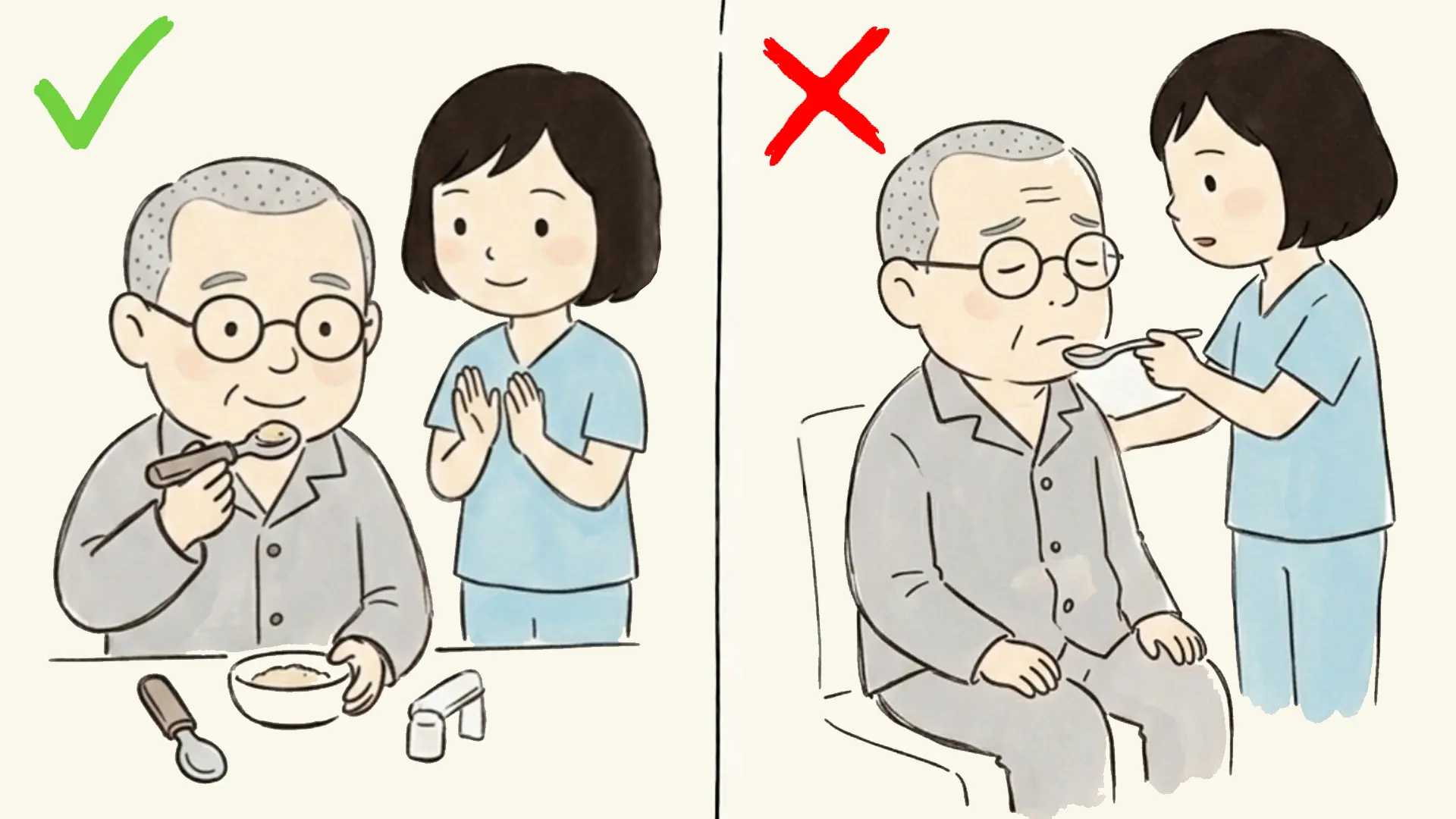
Mealtimes
恰當做法:使用輔助餐具,盡量讓長者自己進餐。
需避免:因長者手指不靈活,由他人餵食。

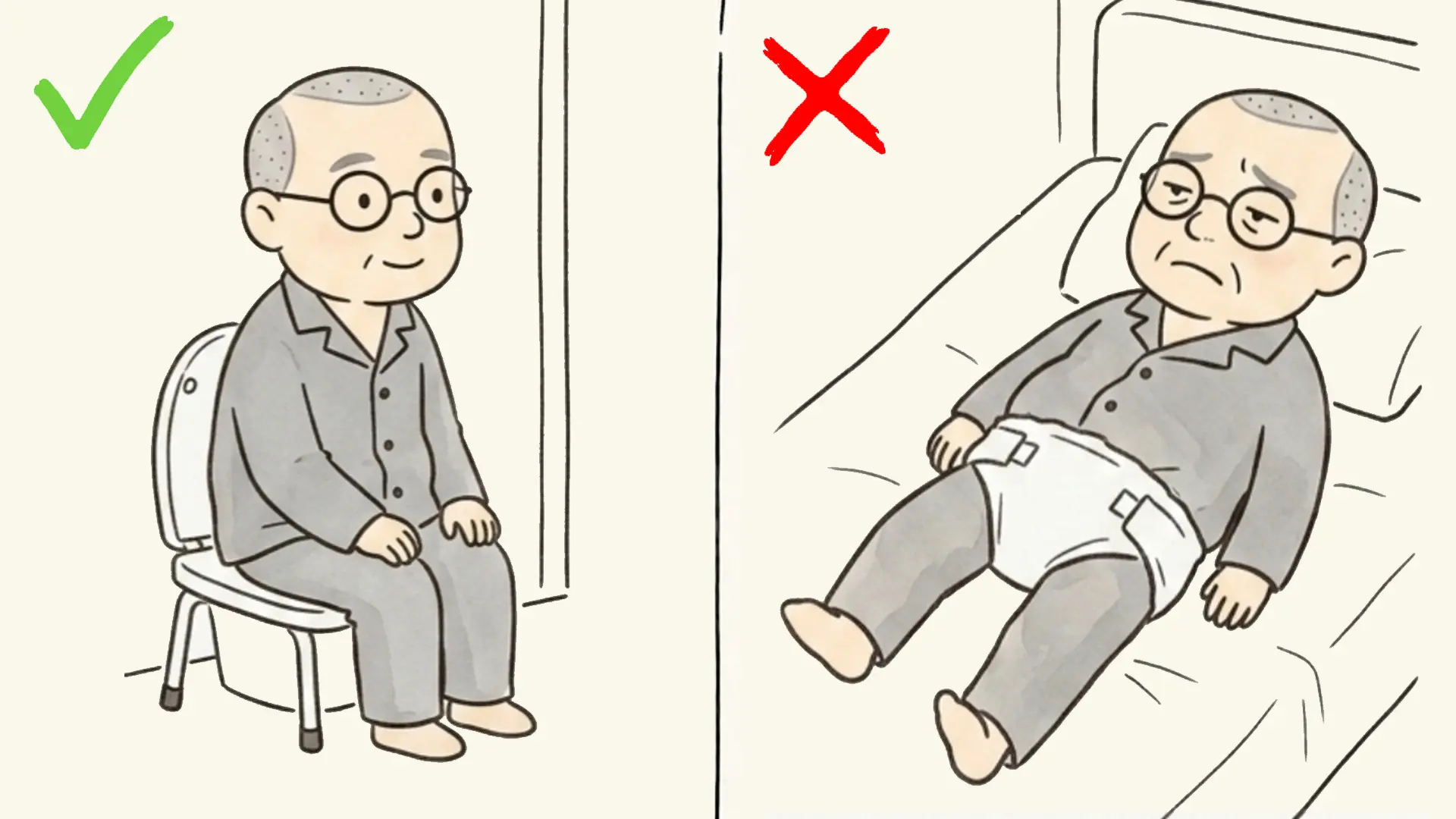
Toileting
恰當做法:鼓勵長者在床上使用尿壺、便器,逐步過渡到離床使用便椅。
需避免:因行動不便直接長期使用尿片,忽略自主排泄訓練。
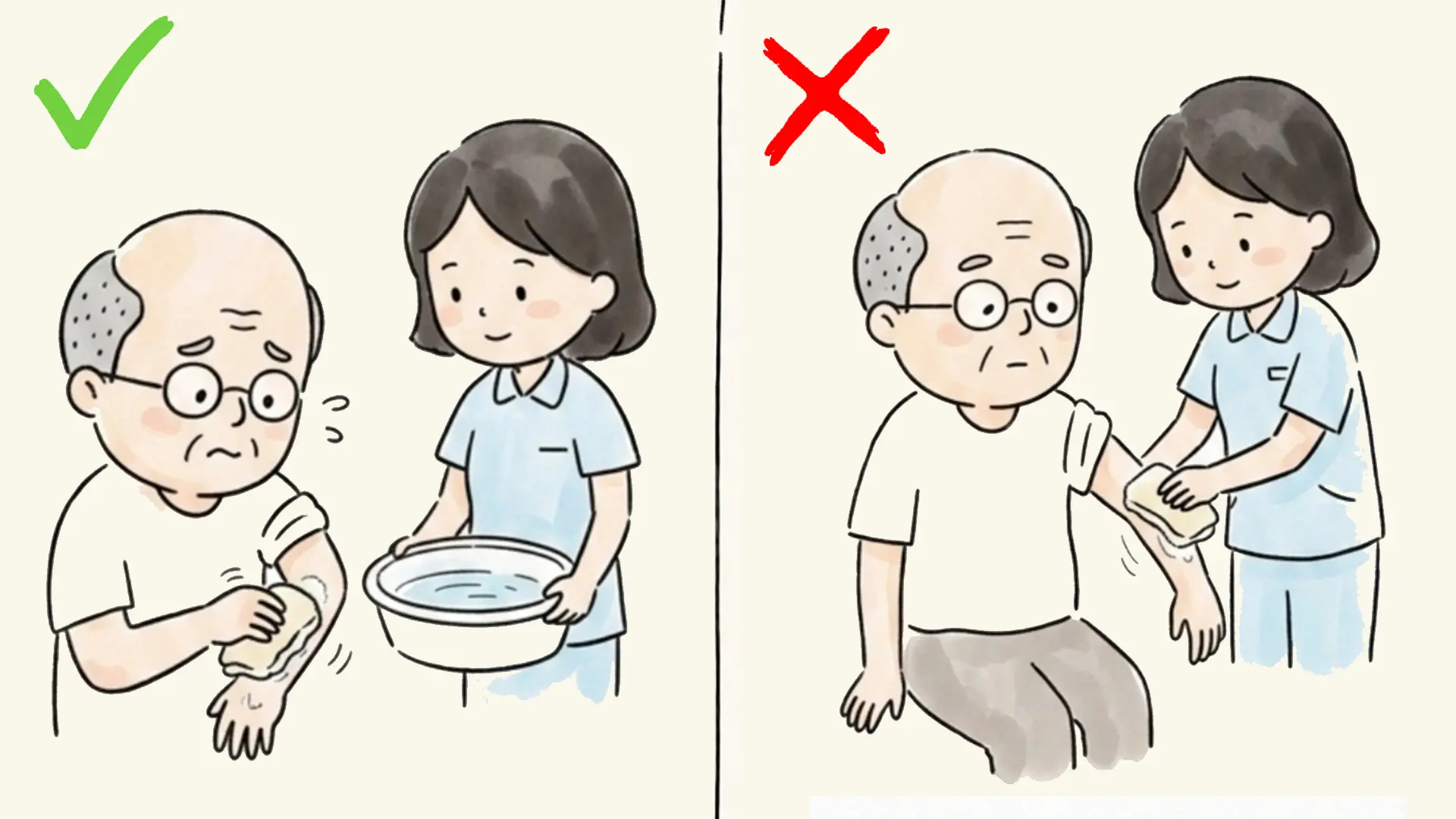
Washing
恰當做法:讓長者自行擦洗肢體可觸及的部位。
需避免:因上肢不夠靈活就全程代勞擦洗。
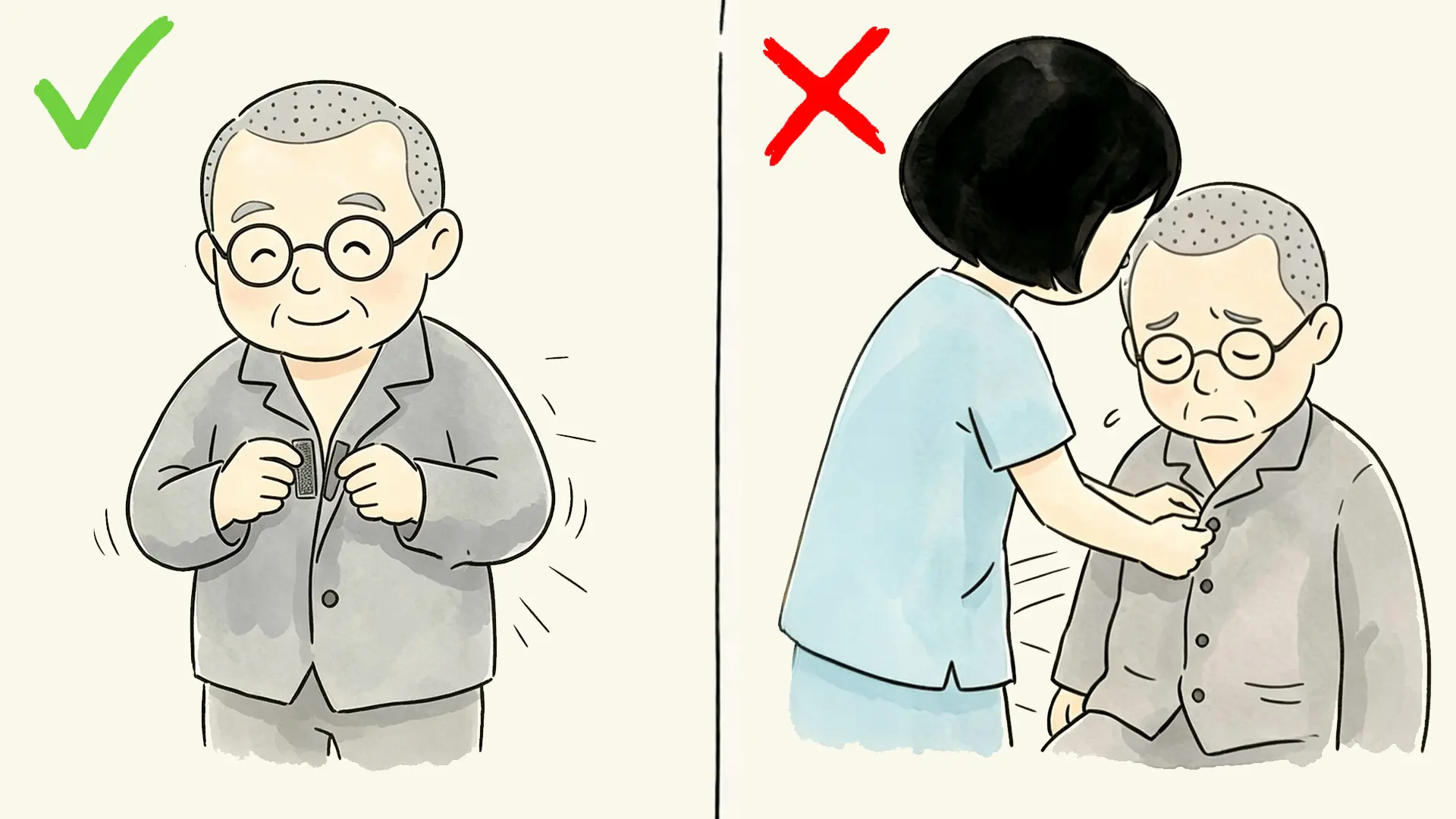
Dressing
恰當做法:把衣物鈕扣換成魔術貼,方便長者自主固定衣物。
需避免:因手指活動不便而全程代勞扣合。
For the sandwich generation, a caregiver support network is vital. AngelCare is built for caregivers — it organises care information and lightens daily coordination. If you're unsure about your elder's capability limits, consider the Registered Nurse Home Assessment: a nurse visits to evaluate their condition and prepare an individualised ICP care plan, giving you an evidence-based answer to 'how much should I help?'
FAQ
Q1. How can families with a domestic helper practise 'supported independence'?
A1: Work with your helper to set a daily routine — which steps the elder does alone and which need help. Demonstrate proper lifting techniques, and post short reminders about feeding and toileting goals where the helper can easily see them.
Q2. Where can stressed caregivers get help?
A2: The government's Caregiver Support Hotline 182 183 is staffed by social workers 24/7 for emotional support and community service enquiries. If insomnia or anxiety persists, see your family doctor or a psychiatrist.
Q3. When should stroke survivors with hemiplegia seek professional rehabilitation?
A3: Follow your doctor's instructions for physiotherapy and occupational therapy after discharge. If the elder resists training, progress stalls, or daily movements (like transferring or holding a spoon) plateau, consult the rehab team to adjust goals and aids.
Q4. Family members disagree on 'how much to help' — what to do?
A4: Let the primary caregiver coordinate and refer to medical staff's assessment of capability limits. Review every two weeks: what the elder can now do alone and what still needs help — this reduces on-the-spot arguments.
Q5. What's the minimum to record in care logs?
A5: Food intake and texture, bowel/urine frequency and character, sleep and mood, medication, falls or near-falls, and rehab completion. AngelCare lets you export health reports in one tap for your doctor at follow-ups.